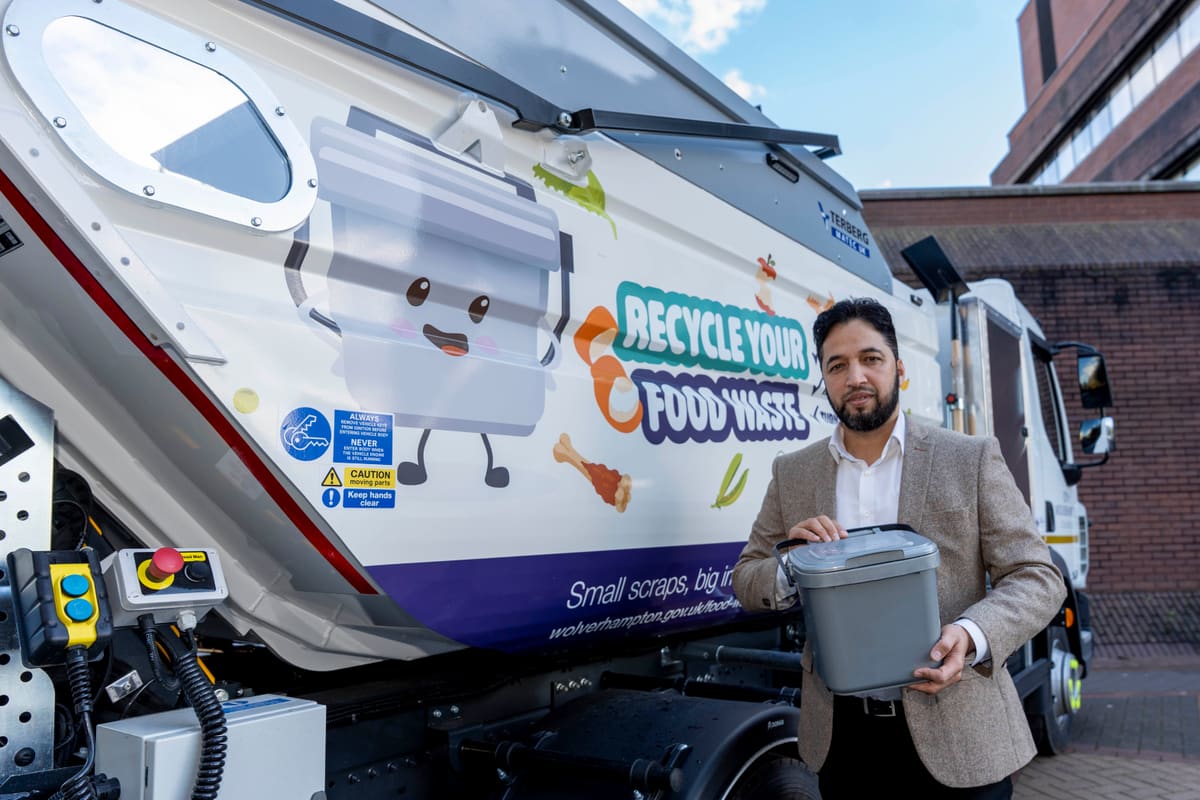
Wolverhampton City Council has introduced weekly food waste collections for kerbside properties across the city. The service is being rolled out under the government's Simpler Recycling legislation, which requires all councils nationwide to offer the collection.
Residents can place food scraps, mouldy food, fruit and vegetable peelings, meat and fish bones, eggshells, teabags, coffee grounds and uneaten pet food in the collections. Pick-ups take place on residents' usual collection day.
What happens to collected food waste
Food waste is transported to an anaerobic digestion facility, where the material is converted into sustainable energy and natural fertiliser. The process also reduces greenhouse gas emissions.
Benefits for households
Recycling food waste can free up space in domestic bins and reduce household bin smells through regular collections. According to figures from WRAP (Waste & Resources Action Programme), millions of tonnes of food waste are thrown away each year, costing the average family around £1,000 annually. Separating food waste can help cut household costs and carbon footprints.
Rollout and availability
The service is initially available to all kerbside properties. A further rollout to flats and other communal properties will follow in the coming months.
Councillor Qaiser Azeem, cabinet member for resident services at City of Wolverhampton Council, said: "We'd encourage as many residents as possible to have a go at using the food waste collections to see what a help they can be. The separate weekly waste collection will help keep bin smells to a minimum as people can get uneaten food out of their homes quickly and easily."
The food waste service complements the council's existing recycling programmes, including its bin contamination campaign Check before you chuck, the Recycle Rovers schools education programme and its free small electricals and batteries collection service.
More information, including frequently asked questions, is available on the council's food waste page.